Anorectal and colorectal conditions are common, yet many people delay seeking help because of discomfort or embarrassment. The good news is that proctology has changed considerably over the past decade. Treatments that once meant larger incisions, longer hospital stays, and slow recovery are now supported by better imaging, refined surgical techniques, modern anesthesia, and structured postoperative care.
Today’s approach goes beyond treating the disease. It aims to preserve function, shorten recovery, and help patients return to everyday life sooner.
The Changing Landscape of Proctology
Modern proctology recognizes that similar symptoms can come from very different conditions. Pain, bleeding, itching, or discomfort around the anus may be linked to hemorrhoids, anal fissures, anal fistulas, pilonidal disease, or a functional bowel disorder. Each condition differs in its anatomy and how it progresses, so an accurate diagnosis and individualized treatment plan are essential.
A Shift in Treatment Philosophy: Preserving Function
Rather than removing tissue whenever possible, contemporary colorectal surgery focuses on:
- Preserving healthy tissue
- Protecting sphincter function
- Maintaining continence
- Improving long-term quality of life
This allows treatment to address the underlying problem while avoiding unnecessary intervention.
Specialized Investigations in Proctology and Colorectal Care
A clinical examination gives valuable information, but it does not always answer every question. Specialized investigations help doctors assess anatomy, muscle function, and the extent of disease before choosing the most suitable treatment.
| Investigation | Clinical Purpose |
| High-Resolution Video Anoscopy | Examines hemorrhoids, fissures, inflammation, and subtle mucosal abnormalities in greater detail |
| Endoanal Ultrasound | Maps fistula tracts and evaluates the anal sphincter muscles before surgery |
| Anorectal Manometry | Assesses muscle coordination and pressure in chronic constipation and fecal incontinence |
| Flexible Sigmoidoscopy | Examines the rectum and lower colon when symptoms need further evaluation |
| Capsule Colonoscopy | Offers a minimally invasive option for selected patients needing colonic assessment |
| HPV Screening | Supports early identification of HPV-related anal lesions in appropriate patients |
Each test adds its own information, so treatment decisions rest on a complete understanding of the condition.
Why Day Surgery Has Changed Patient Care
Advances in anesthesia, minimally invasive techniques, and enhanced recovery protocols have changed how many proctology procedures are performed. For appropriately selected patients, several conditions can now be managed through day surgery, meaning treatment, recovery, and discharge all happen on the same day, without compromising clinical outcomes.
Potential benefits of day surgery include:
- Shorter hospital stays
- Earlier return to daily activities
- Less disruption to work and family life
- Structured postoperative follow-up
Recovery is further supported by pain management, bowel care, dietary guidance, and scheduled clinical reviews.
From Conventional Surgery to Modern Treatment Techniques
Today, treatment is chosen according to the condition, its anatomy, and functional considerations, not simply the diagnosis.
Hemorrhoid (Piles) Treatment
For hemorrhoidal disease, procedures such as Laser Hemorrhoidoplasty, HAL-RAR, and the Rafaelo Procedure offer targeted treatment for appropriately selected cases.
Anal Fistula Treatment
Fistulas may be managed with LIFT (Ligation of the Intersphincteric Fistula Tract) or fistulotomy, depending on the fistula’s anatomy. The priority is preserving the sphincter whenever clinically possible.
Chronic Anal Fissure Treatment
When a chronic anal fissure does not respond to conservative care, Lateral Internal Sphincterotomy (LIS) remains an established surgical option. It promotes healing and relieves persistent muscle spasm.
Proctology Center at Burjeel Day Surgery Center, Al Reem Island
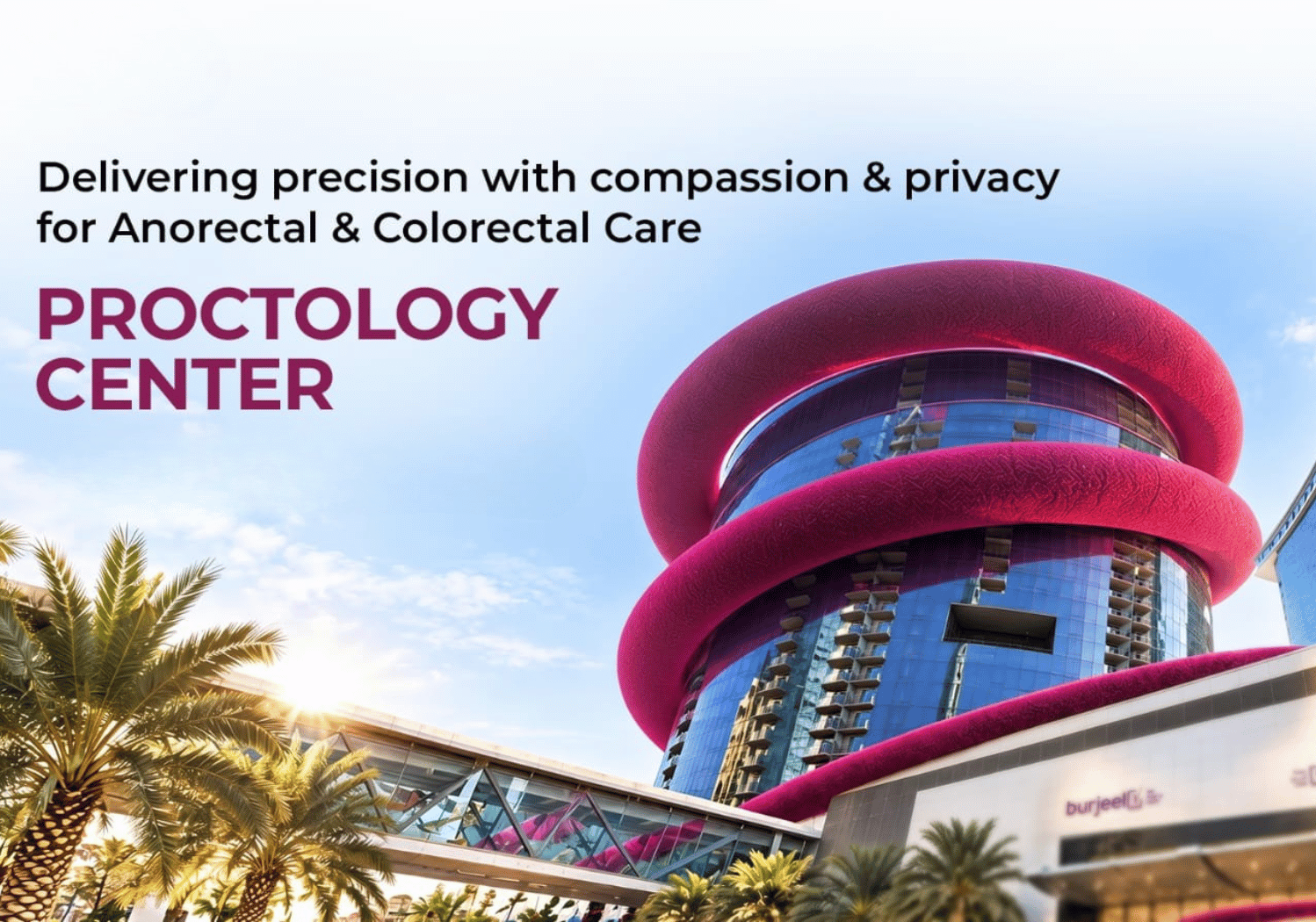
At Burjeel Day Surgery Center Al Reem Island, the Proctology Center provides comprehensive evaluation and treatment for a wide range of proctology and colorectal conditions. Advanced investigations, evidence-based treatment options, and dedicated day surgery pathways allow care to be tailored to each patient’s clinical needs.
Consult our specialists: Dr. Ahmed Al Mazrouei | Dr. Mohammed Alqaydi
When Should You See a Proctologist?
Consider booking a consultation if you experience:
- Rectal bleeding or blood on toilet paper
- Persistent anal pain, itching, or swelling
- Recurrent discharge, abscess, or a suspected fistula
- Chronic constipation or difficulty passing stool
- Bowel leakage or loss of control
- Symptoms that have not improved with home care
Rectal bleeding and other persistent symptoms should always be evaluated by a doctor rather than assumed to be piles.
Conclusion
Proctology and colorectal care have moved toward precise diagnosis, function-preserving treatment, and faster recovery. With specialized investigations to guide decisions, modern techniques for hemorrhoids, fistulas, and fissures, and day surgery pathways for suitable patients, many people can now receive effective care with less disruption to their daily lives. Early evaluation is the first step toward the right treatment.
Frequently Asked Questions (FAQs)
A proctologist evaluates and treats conditions of the anus, rectum, and lower colon, including hemorrhoids, anal fissures, anal fistulas, pilonidal disease, and functional bowel disorders such as chronic constipation and fecal incontinence.
Bleeding, pain, and itching can be caused by several conditions, including hemorrhoids, fissures, fistulas, or other disorders. A clinical examination, along with tests such as video anoscopy or sigmoidoscopy where needed, helps identify the cause accurately.
Anorectal manometry measures muscle pressure and coordination in the anorectal area. It is used to assess chronic constipation and fecal incontinence.
It maps fistula tracts and evaluates the anal sphincter muscles before surgery, helping the surgeon plan treatment that protects sphincter function.
Depending on the case, options include Laser Hemorrhoidoplasty, HAL-RAR, and the Rafaelo Procedure. Your doctor will recommend the most suitable option after assessment.
Treatment may involve LIFT or fistulotomy, depending on the fistula’s anatomy. Preserving the sphincter is prioritized whenever clinically possible.
LIS is a surgical procedure for chronic anal fissures that do not respond to conservative care. It helps relieve persistent muscle spasm and promotes healing.
For appropriately selected patients, several procedures can be performed as day surgery, with treatment, recovery, and discharge on the same day. Suitability depends on your condition and overall health, which your doctor will assess.
Recovery is supported by pain management, bowel care, dietary guidance, and scheduled follow-up reviews, so you are guided at each stage.
HPV screening supports early identification of HPV-related anal lesions in appropriate patients. Your doctor can advise whether it is right for you.
Don’t ignore persistent anorectal symptoms.
Get a thorough evaluation and a treatment plan tailored to you at the Proctology Center, Burjeel Day Surgery Center, Al Reem Island