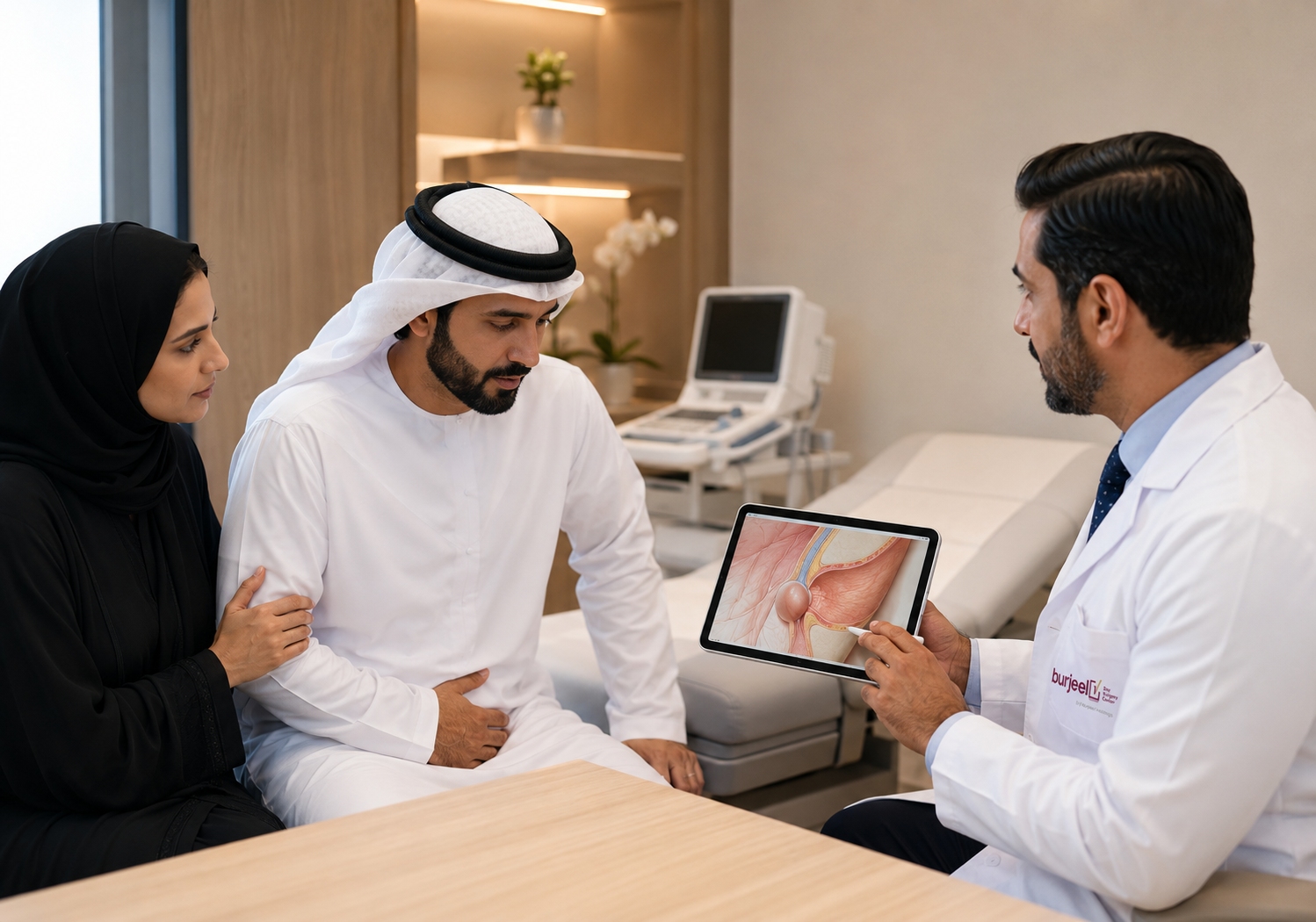
A hernia is a common surgical condition that may appear as a bulge or swelling in the abdomen or groin area. It may become more noticeable when coughing, lifting heavy objects, standing for long periods, or straining. A hernia occurs when internal tissue, such as fat or part of the intestine, pushes through a weak spot in the muscle or abdominal wall.
This article explains what a hernia is, its symptoms, common types, when it becomes urgent, how it is diagnosed, and the surgical treatment options available, especially for patients in Al Dhafra, Abu Dhabi, and nearby areas such as Madinat Zayed, Ruwais, Ghayathi, Liwa, and Al Sila.
Medical Disclaimer: This article is for educational purposes only and does not replace medical consultation. If a hernia is associated with sudden severe pain, vomiting, abdominal swelling, skin color changes over the bulge, or inability to push the bulge back in, seek urgent medical evaluation.
What is a Hernia?
A hernia occurs when part of an internal organ or fatty tissue pushes through a weakness or opening in the muscle or tissue that normally keeps it in place. Hernias often appear in the abdomen or groin and may look like a bulge or lump under the skin.
A hernia may be mild and painless at first, but it can enlarge over time or cause discomfort, especially during movement, standing, coughing, or lifting. Some hernias may only require monitoring if they do not cause symptoms, while others may need surgical repair if they are painful, enlarging, or at risk of complications.
What Causes a Hernia?
A hernia usually develops when two factors occur together: weakness in the muscle wall and increased pressure inside the abdomen. The weakness may be present from birth or develop later due to aging, previous surgery, injury, or repeated strain.
Factors that may increase the risk of developing a hernia include:
- Repeated heavy lifting.
- Chronic cough.
- Constipation or repeated straining.
- Excess weight.
- Pregnancy.
- Previous abdominal surgery.
- Weakening of abdominal muscles with age.
- Family history of certain types of hernia.
Does a Hernia Always Cause Symptoms?
No. Some hernias do not cause obvious pain. A patient may only notice a bulge that appears and disappears. The bulge may become more visible when standing or coughing and may reduce or disappear when lying down.
In other cases, a hernia may cause pain, heaviness, pulling, or difficulty with certain daily activities. If a hernia becomes painful or enlarges over time, it should be evaluated by a general surgeon to determine the most suitable treatment plan.
Hernia Symptoms You Should Not Ignore
Hernia symptoms depend on the type and location of the hernia, but common symptoms include:
- A bulge or lump in the abdomen or groin.
- A bulge that becomes larger when coughing, standing, or lifting.
- A bulge that may reduce or disappear when lying down.
- Pain, heaviness, or pulling sensation at the hernia site.
- Pain that worsens with movement, bending, coughing, or lifting.
- A feeling of pressure or fullness in the hernia area.
- In some cases, nausea, vomiting, or abdominal bloating if complications occur.
If the hernia is painful or begins to enlarge, it should not be ignored. Some hernias may progress and require surgical repair to prevent complications.
Where Do Hernias Usually Occur?
Hernias can occur in different areas of the body. Common locations include:
- Groin or upper thigh: Known as an inguinal hernia, one of the most common types.
- Around the belly button: Known as an umbilical hernia.
- At the site of previous surgery: Known as an incisional hernia.
- Upper thigh near the groin: Known as a femoral hernia.
- Diaphragm or upper stomach area: Known as a hiatal hernia, which may be associated with reflux or heartburn symptoms.
Common Types of Hernia
1. Inguinal Hernia
An inguinal hernia occurs in the groin area when tissue or part of the intestine pushes through a weak point in the lower abdominal wall. It may appear as a bulge in the groin or upper thigh and may become more visible when standing or coughing.
It may cause pain or heaviness, especially when bending, lifting, or coughing. In some cases, it may not cause obvious symptoms at first.
2. Umbilical Hernia
An umbilical hernia appears around or near the belly button. It can occur in children or adults. In adults, surgical repair may be recommended if the hernia enlarges, becomes painful, or raises concern for complications.
3. Incisional Hernia
An incisional hernia develops at the site of a previous abdominal surgery when the abdominal wall becomes weak in the scar area. It may appear as a bulge along an old surgical scar and should be evaluated if it enlarges or causes symptoms.
4. Femoral Hernia
A femoral hernia appears in the upper thigh near the groin and is less common than an inguinal hernia. It requires medical evaluation because some femoral hernias may have a higher risk of becoming trapped.
5. Hiatal Hernia
A hiatal hernia occurs when part of the stomach moves upward into the chest through an opening in the diaphragm. It may not cause an external bulge and may be associated with heartburn or reflux symptoms.
When is a Hernia an Emergency?
Seek urgent medical evaluation if you notice any of the following:
- Sudden or severe pain at the hernia site.
- Inability to push the hernia back in if it was previously reducible.
- Redness or color change over the hernia.
- Persistent nausea or vomiting.
- Severe abdominal bloating.
- Severe constipation or inability to pass gas.
- Fever or worsening general condition.
These signs may suggest an incarcerated or strangulated hernia, which can affect blood supply to the trapped tissue and may require urgent treatment.
How is a Hernia Diagnosed?
Diagnosis usually begins with a clinical examination. The doctor may ask the patient to stand, cough, or strain because this can make the bulge more visible, especially in inguinal hernias.
In some cases, if the hernia is not clearly visible or if the doctor needs to assess its size or complications, imaging tests such as ultrasound, CT scan, or MRI may be requested depending on the case.
Can a Hernia Be Treated Without Surgery?
In some small hernias that do not cause symptoms, the doctor may recommend observation and monitoring, especially if the hernia does not cause pain or affect daily life.
However, in adults, a hernia usually does not disappear on its own and may enlarge over time. If the hernia is painful, growing, or causing symptoms, surgical repair may be the appropriate option.
Treatment Options for Hernia
The treatment plan depends on the type of hernia, its size, symptoms, the patient’s general health, and whether the hernia is new or recurrent after previous repair.
1. Observation and Monitoring
Observation may be suitable if the hernia is small and does not cause symptoms. In this case, the doctor explains warning signs that require urgent medical attention.
2. Lifestyle Adjustments
Reducing factors that increase abdominal pressure may help reduce symptoms. This may include weight control, treating constipation, avoiding improper heavy lifting, and managing chronic cough. These measures do not repair the hernia itself, but they may reduce pressure on the weak area.
3. Surgical Hernia Repair
Surgery is the main way to repair a hernia when it is painful, enlarging, or causing symptoms or complications. During surgery, the protruding tissue is returned to its normal position and the weak area is strengthened. Surgical mesh may be used in some cases to reinforce the abdominal wall.
What Are the Surgical Treatment Options for Hernia?
Open Hernia Repair
In open hernia repair, the surgeon makes one incision over the hernia, returns the protruding tissue to its place, and strengthens the weak area using stitches or surgical mesh depending on the case. The procedure may be performed under local anesthesia with sedation or under general anesthesia, depending on the type of hernia and the patient’s condition.
Laparoscopic Hernia Repair
In laparoscopic hernia repair, several small incisions are made in the abdomen, and a camera with fine instruments is used to repair the hernia. This approach may be associated with less pain, smaller scars, and a faster return to daily activities in selected cases, but the decision depends on the surgeon’s assessment.
Robotic Hernia Repair
Robotic repair is an advanced form of minimally invasive surgery in which the surgeon uses robotic instruments through small incisions. It is not suitable for every case and depends on the hernia type, availability of technology, and the surgical team’s expertise.
Use of Surgical Mesh
In many hernia repairs, the surgeon may use mesh to strengthen the weak area and reduce the chance of recurrence. The need for mesh depends on the type, size, and location of the hernia, as well as the condition of the tissues.
When Do You Need Hernia Repair Surgery?
A doctor may recommend surgical repair if the hernia:
- Causes pain or discomfort.
- Enlarges over time.
- Affects movement, work, or daily activity.
- Cannot be easily pushed back in.
- Is associated with warning signs.
- Has recurred after previous surgery.
- Is located in a type or area with higher risk of complications.
There is no single decision that applies to every patient. The treatment choice depends on medical examination, hernia type, symptom severity, and individual risk factors.
When Should You See a General Surgeon?
If you live in Al Dhafra and notice a bulge in the abdomen or groin, or pain that worsens with coughing, lifting, or standing, it is advisable to consult a general surgeon. Medical evaluation helps determine the type and size of the hernia and whether it requires monitoring or surgical repair.
Having general surgery services in Al Dhafra makes evaluation and follow-up more accessible for residents of Madinat Zayed, Ruwais, Ghayathi, Liwa, and Al Sila, helping patients avoid delaying assessment or traveling long distances when symptoms appear.
How to Prepare for Hernia Repair Surgery?
Before surgery, the doctor reviews medical history, medications, tests, and the type of hernia. The patient may need anesthesia assessment and instructions about fasting, stopping or adjusting certain medications, and arranging transport home after surgery.
It is important to tell the doctor if you have chronic conditions such as diabetes, heart disease, breathing problems, or if you take blood-thinning medications, as these factors may affect the surgery and anesthesia plan.
What Happens During Hernia Repair Surgery?
The steps of surgery vary depending on the hernia type and repair method. In general, the surgeon returns the protruding tissue to its normal position and strengthens the weak area with stitches or mesh when needed. The procedure may be performed as open surgery or laparoscopic surgery depending on the case.
For inguinal hernia repair, surgery may be performed through an open incision in the groin or through small laparoscopic incisions in the abdomen. The doctor chooses the most suitable approach based on hernia size, location, symptoms, surgical history, and the patient’s general health.
Recovery After Hernia Surgery
Recovery time after hernia surgery varies depending on the type of hernia, repair method, patient condition, and nature of work or daily activity. After inguinal hernia repair, some patients may need several weeks before fully returning to usual activities, although this varies from person to person.
After surgery, mild pain around the wound, swelling, bruising, or a pulling sensation may occur. These symptoms may be expected in the first few days, but patients should follow the doctor’s instructions regarding movement, wound care, medications, and returning to work or sports.
When Should You Contact the Doctor After Hernia Surgery?
Contact your doctor if you notice any of the following after surgery:
- Fever.
- Increase in pain severity.
- Marked redness or discharge from the wound.
- Increasing swelling or bleeding.
- Persistent vomiting.
- Difficulty passing urine.
- Sudden severe pain.
- A clear return of the bulge at the hernia site.
Hernia Evaluation and Repair at Burjeel Day Surgery Centre – Al Dhafra
The General and Laparoscopic Surgery Department at Burjeel Day Surgery Centre – Al Dhafra evaluates hernia cases, including inguinal hernia, umbilical hernia, abdominal wall hernia, and cases that may require surgical repair or monitoring. The department’s services include laparoscopic surgeries, hernia repair, appendectomy, gallbladder removal, thyroid surgery, breast surgery, wound care, and emergency surgical care.
Dr. Ayham Saied Alhajali, Specialist General Surgery, evaluates surgical and laparoscopic cases within the General Surgery Department at Burjeel Al Dhafra. His experience includes general surgery and laparoscopic surgery, including abdominal hernia cases, laparoscopic emergency surgeries, and day surgery procedures.
Frequently Asked Questions
A hernia is not always dangerous, but it may enlarge or cause pain or complications if left without follow-up. Some cases require surgical repair, especially if the hernia is painful, enlarging, or cannot be pushed back in.
No. Some small painless hernias may be monitored. However, a painful, enlarging, or symptomatic hernia may require surgical repair depending on the doctor’s assessment.
A bulge may be a hernia if it appears in the abdomen or groin, increases with coughing, standing, or lifting, and reduces when lying down. Diagnosis requires medical examination, and imaging may be needed in some cases.
Some cases can be monitored if they are small and do not cause symptoms. However, hernias in adults usually do not disappear on their own and may need repair if they cause pain or enlarge over time.
Open surgery uses one incision over the hernia, while laparoscopic surgery uses small incisions, a camera, and fine instruments. Laparoscopic repair may help reduce pain and scarring and support faster recovery in selected cases, but the choice depends on surgical assessment.
No. Mesh is not required in every case, but it is often used to strengthen the weak area and reduce recurrence risk. The doctor decides based on the type, size, and location of the hernia and the patient’s condition.
Seek urgent care if the hernia is severely painful, cannot be pushed back in, is associated with vomiting, abdominal bloating, skin color changes over the hernia, or worsening general condition.
Hernia evaluation and treatment services are available through the General and Laparoscopic Surgery Department at Burjeel Day Surgery Centre – Al Dhafra. The doctor determines whether monitoring or surgical repair is needed based on symptoms and examination.
You should see a general surgeon if you notice a bulge in the abdomen or groin, pain that worsens with coughing or lifting, or if the bulge is growing or difficult to push back in.
This depends on the condition and required services. Having general surgery services in Al Dhafra can make evaluation and follow-up easier for residents of Madinat Zayed, Ruwais, Ghayathi, Liwa, and Al Sila.
Conclusion
If you have a bulge in the abdomen or groin, pain with coughing or lifting, or have been diagnosed with a hernia, you can visit the General Surgery Department at Burjeel Day Surgery Centre – Al Dhafra for evaluation and to understand whether monitoring, conservative management, or surgical hernia repair is the most suitable plan for your condition.