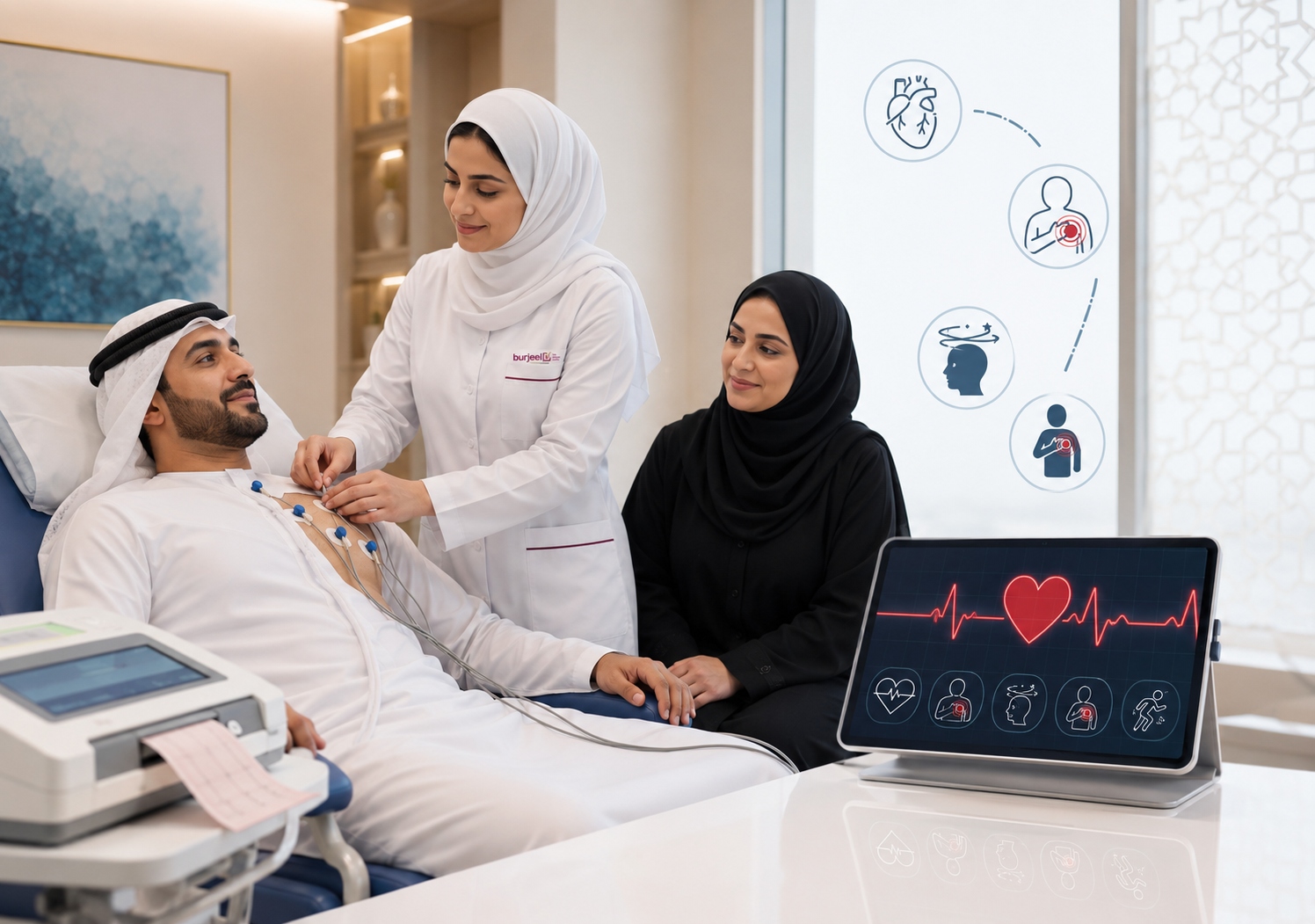
An ECG test is one of the most common heart tests. It is quick, painless, and helps doctors check the heart’s rhythm and electrical activity. It may be recommended for chest pain, palpitations, dizziness, routine heart checks, or occupational screening.
This article explains what an ECG shows, when it is needed, how to prepare, and how patients in Al Dhafra and Abu Dhabi can access ECG testing as part of cardiology care.
Medical Disclaimer: This article is for educational purposes only and does not replace medical consultation. If symptoms are severe, persistent, or associated with warning signs, seek medical evaluation.
What is an ECG Test?
An electrocardiogram, also called ECG or EKG, records the electrical signals of the heart through small sensors placed on the chest and sometimes the arms or legs. It helps evaluate heart rhythm and electrical activity.
What Causes the Need for an ECG?
A doctor may request an ECG for chest pain, palpitations, dizziness, fainting, high blood pressure, shortness of breath, known heart disease, medication monitoring, pre-procedure assessment, or occupational health screening.
Does an ECG Always Detect Heart Disease?
No. An ECG records heart activity at the time of the test. Some rhythm problems or symptoms come and go, so Holter monitoring, stress testing, or echocardiogram may be needed if symptoms are intermittent.
Symptoms You Should Not Ignore
- Chest pain or pressure.
- Palpitations or irregular heartbeat.
- Dizziness or fainting.
- Shortness of breath.
- Unexplained fatigue with exertion.
- Very fast or very slow heartbeat.
- High blood pressure with symptoms.
Where is the Problem Felt?
An ECG does not locate pain directly, but it helps assess whether symptoms such as chest pain, palpitations, breathlessness, or dizziness may be related to heart rhythm or electrical activity.
ECG vs Echocardiogram
An ECG records electrical activity and rhythm. An echocardiogram uses ultrasound to show the heart’s structure, valves, and pumping function. Both tests are useful but answer different clinical questions.
When is it an Emergency?
Seek urgent care if symptoms include severe chest pain, fainting, shortness of breath, sudden weakness, sweating, nausea, or pain spreading to the arm, jaw, back, or neck.
How is an ECG Done?
Small sticky sensors are placed on the skin and connected to a machine that records heart signals. The test usually takes only a few minutes and is painless.
Treatment Options After ECG
Treatment depends on the ECG findings and symptoms. The doctor may recommend reassurance, medication review, blood pressure control, cholesterol management, further tests, Holter monitoring, or urgent referral if needed.
What is a Holter Monitor After ECG?
If symptoms happen occasionally and do not appear during a standard ECG, the doctor may recommend a Holter monitor to record heart rhythm over 24-48 hours or longer.
When Do You Need an ECG?
You may need an ECG if you have chest pain, palpitations, dizziness, fainting, blood pressure concerns, a known heart condition, or work screening requirements.
ECG Testing in Al Dhafra: When Should You See a Specialist?
Residents of Madinat Zayed, Ruwais, Ghayathi, Liwa, and Al Sila can seek cardiology assessment if symptoms are recurrent, unclear, or linked to risk factors such as diabetes, high cholesterol, or hypertension.
Preparation / What Happens During the ECG
Wear comfortable clothing and avoid applying oily creams to the chest before the test because sensors need to stick to the skin. Bring previous ECGs and medication details if available.
Recovery and Aftercare
There is no recovery time after a standard ECG. Your doctor will explain the result and whether further testing, monitoring, or follow-up is needed.
Care at Burjeel Day Surgery Centre, Al Dhafra
At Burjeel Day Surgery Centre, Al Dhafra, the Cardiology Department provides adult cardiology consultation and non-invasive heart assessments for patients from Madinat Zayed, Ruwais, Ghayathi, Liwa, Al Sila, and the wider Al Dhafra and Abu Dhabi region. Dr. Yazan Azzam, Specialist Cardiology, evaluates chest pain, blood pressure, cholesterol, palpitations, heart rhythm concerns, heart failure symptoms, and preventive heart health needs.
Frequently Asked Questions
No. An ECG is painless and non-invasive.
The recording itself usually takes only a few minutes.
An ECG can show changes that may suggest current or previous heart attack, but blood tests and further evaluation may also be needed.
It can detect rhythm changes if they are happening during the test. Intermittent palpitations may need Holter monitoring.
Not always. Chest pain assessment may also require blood tests, echocardiogram, stress testing, or emergency evaluation depending on symptoms.
Yes. ECG may be part of occupational health cardiac screening depending on work requirements and medical risk.
Usually minimal preparation is needed. Avoid oily skin products and bring previous reports.
Yes. A standard ECG records electrical activity and does not deliver electricity into the body.
Tell your doctor. Further testing may be needed if symptoms persist or recur.
ECG testing is part of cardiology services at Burjeel Day Surgery Centre, Al Dhafra.
If you have chest pain, palpitations, dizziness, high blood pressure, or need an ECG test in Al Dhafra, you can book a cardiology consultation at Burjeel Day Surgery Centre, Al Dhafra for assessment and guidance.