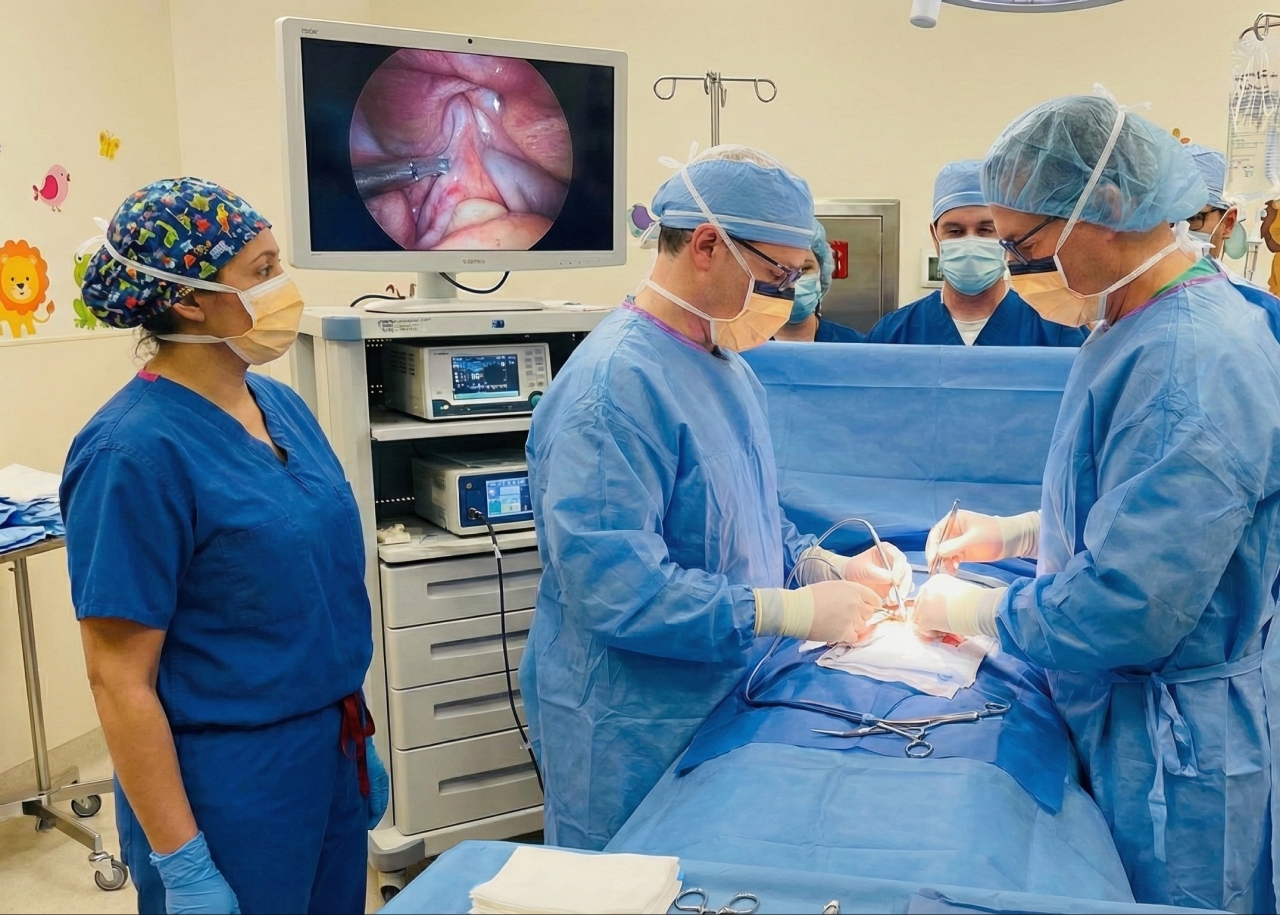
For seven months, a baby suffered with a condition so rare it affects only 1 in 100,000 newborns. Persistent vomiting since birth, recurring chest infections, and the inability to feed normally left the child and family frustrated and exhausted. The diagnosis: esophageal achalasia, a condition where the lower esophageal sphincter fails to relax, preventing food from passing into the stomach.
The Long Road to Diagnosis
The 7-month-old child presented to the Emergency Room with a troubling medical history:
- Persistent vomiting since birth
- Fed exclusively through nasogastric tube
- Recurrent episodes of aspiration
- Multiple chest infections
- Frequent nasogastric tube replacements
The child and family were understandably distressed by the ongoing situation. Previous investigations at another facility finally revealed the cause: a contrast study showing esophageal achalasia—distal esophageal obstruction present from birth.
Understanding Esophageal Achalasia
Esophageal achalasia is an extremely rare condition in pediatric patients, characterized by:
- Failure of the lower esophageal sphincter to relax
- Inability to swallow food normally
- Accumulation of food in the esophagus
- Risk of aspiration into the lungs
- Chronic malnutrition and failure to thrive
In children, symptoms include:
- Persistent vomiting
- Feed intolerance
- Underweight/failure to thrive
- Recurrent aspiration pneumonia
- Respiratory failure in severe cases
The Surgical Solution: Laparoscopic Heller Myotomy
After careful stabilization, the child underwent minimally invasive surgery under general anesthesia: Laparoscopic Heller myotomy with 270-degree fundoplication.
Why this approach?
- Minimally invasive (small incisions)
- Precise relief of esophageal obstruction
- Fundoplication prevents reflux after opening the sphincter
- Faster recovery than open surgery
- Less post-operative pain
Operative time: One and a half hours
Remarkable Recovery
The post-operative course was exceptional:
Post-Operative Day 1:
- Chest tube removed
- Started on oral feeds
Post-Operative Day 4:
- Reached full oral feeds
- No feeding difficulties
Post-Operative Day 7:
- Discharged home in stable condition
- Normal feeding pattern established
Follow-up pulmonary function tests: FEV1 – 77%, FVC – 88% (satisfactory recovery)
The Complexity of Pediatric Minimally Invasive Surgery
Performing laparoscopic surgery on a 7-month-old infant presents unique challenges:
- Limited anatomical space: Small body size requires precision
- Delicate tissue handling: Infant tissues are fragile
- Anesthesia considerations: Careful management required
- Post-operative care: Specialized PICU monitoring needed
Success requires:
- High-level surgical skill
- Specialized pediatric anesthesia expertise
- Advanced laparoscopic equipment designed for infants
- Experienced PICU team
- Coordinated multidisciplinary approach
Long-term Outlook
With successful surgery, children with esophageal achalasia can:
- Feed normally by mouth
- Gain weight appropriately
- Avoid recurrent respiratory infections
- Develop normally
- Enjoy good quality of life
Regular follow-up ensures the surgical repair remains effective and the child continues to thrive.
Why Minimally Invasive Matters for Children
Traditional open surgery would have required:
- Large abdominal incision
- Longer hospital stay
- More post-operative pain
- Larger scar
- Extended recovery time
Laparoscopic approach offers:
- Small keyhole incisions
- Minimal scarring
- Reduced pain
- Faster recovery
- Earlier return to normal feeding
- Better cosmetic outcome as the child grows
Burjeel’s Pediatric Surgery Excellence
Our pediatric surgical capabilities include:
- Specialized pediatric surgeons
- Advanced laparoscopic equipment for infants
- Pediatric anesthesia team
- PICU with neonatal/infant expertise
- Multidisciplinary pediatric care
- Family-centered approach
Our Experts
Dr. Mohsen Mostafa
Consultant & HOD – Anesthesia
Burjeel Hospital, Abu Dhabi
Expert Pediatric Surgical Care
Complex pediatric conditions require specialized expertise and child-focused care. Our team provides comprehensive evaluation and advanced surgical solutions for infants and children.