-
Allergy and Immunology Clinic
-
Anesthesiology
-
Burjeel Orthopedic Institute
-
Cardiology and Cardiovascular Surgery
-
Dentistry
-
Dermatology and Cosmetology
-
Diabetes and Endocrinology
-
ENT, Head and Neck Surgery
-
Family Medicine
-
General and Laparoscopic Surgery
-
Gynecology and Obstetrics
-
Internal Medicine
-
Jazzar Gastrointestinal and Liver Disease Center
-
Laser Vision Correction Center
-
Medical Oncology
-
Men’s Wellness and Aesthetics Clinic
-
Menopause & Midlife Health Clinic
-
Nephrology
-
Neurology
-
Neurosurgery
-
Nutrition and Dietetics
-
Ophthalmology
-
Pain Management
-
Pediatrics
-
Physical Medicine and Rehabilitation
-
Physiotherapy and Rehabilitation
-
Plastic, Aesthetic and Reconstructive Surgery
-
Proctology Center
-
Psychiatry and Behavioral Health
-
Pulmonology
-
Radiology
-
Rheumatology
-
Speech Therapy
-
Spine Care Center
-
Thyroid Parathyroid Center
-
Thyroid Thermal Ablation
-
Urology
-
Vascular and Endovascular Surgery
-
Weight Management Clinic
Treat Thyroid Nodules Without Surgery
A minimally invasive, scar-free approach designed to reduce thyroid nodules while preserving healthy thyroid tissue.
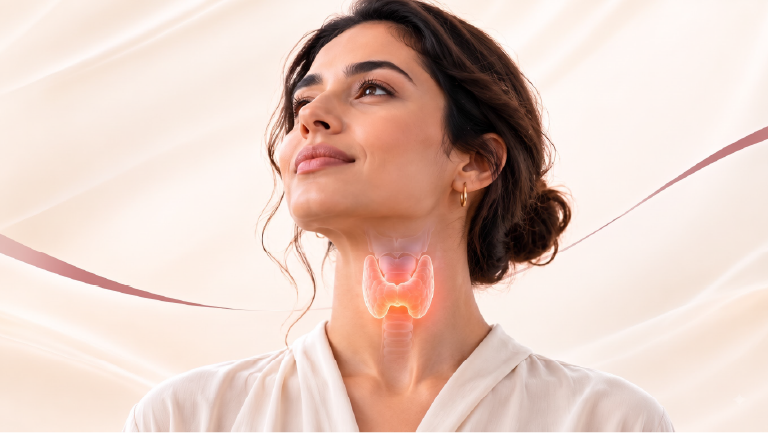
Thyroid Thermal Ablation uses image guidance and controlled heat to precisely target selected thyroid nodules. The treated nodule gradually reduces size over time, helping relieve symptoms such as neck pressure, swallowing discomfort, and visible swelling. Thyroid Thermal Ablation is an image-guided treatment that uses precisely controlled heat to treat targeted thyroid tissue.
Thermal ablation techniques can include radiofrequency ablation (RFA), microwave ablation and laser ablation, depending on clinical indication and available expertise.
Who May Benefit?

Thermal ablation may be considered for selected patients with thyroid nodules that are causing:
- Neck pressure or discomfort
- Difficulty or discomfort when swallowing
- A visible neck swelling or cosmetic concern
- Hyperthyroidism related to an autonomously functioning thyroid nodule
Before treatment, the nodule requires appropriate clinical, ultrasound, and cytological assessment to establish whether thermal ablation is suitable. Guidance from the American Thyroid Association includes benign cytology and appropriate ultrasound characteristics among the key selection criteria for thermal ablation of benign thyroid nodules.
Not every thyroid nodule requires treatment, and not every nodule is suitable for thermal ablation.
What to Expect
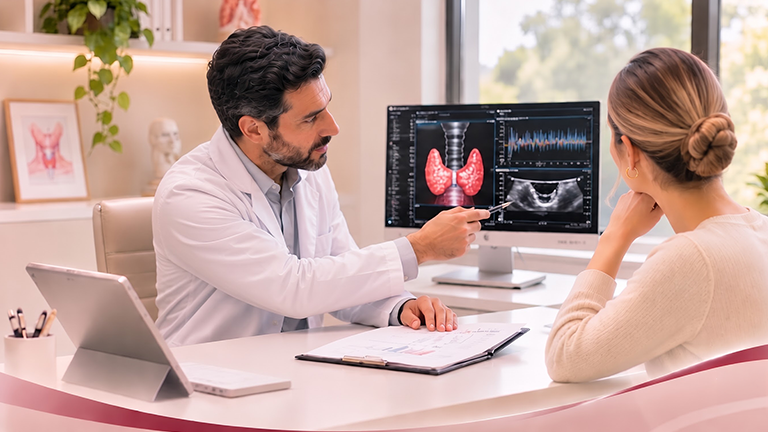
Consultation & Assessment
Your specialist evaluates the thyroid nodule, symptoms, and ultrasound findings. A biopsy may be needed to confirm the nodule is benign.
Recovery
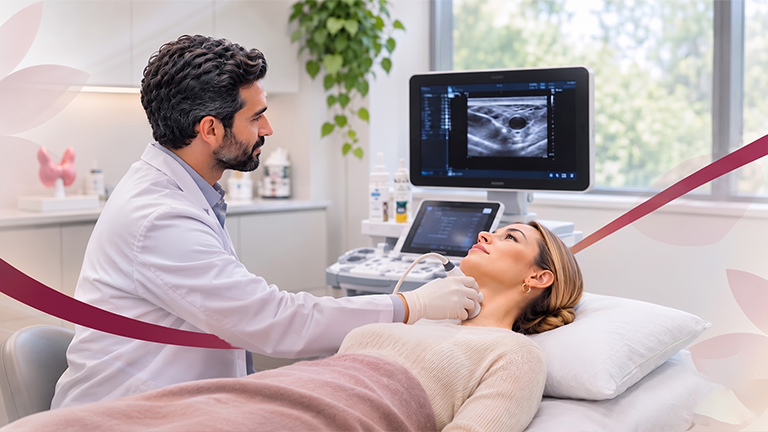
Ablation can be performed under local anesthesia and sedation without an overnight hospital stay, allowing a considerably quicker recovery than conventional open surgery.
Image-Guided Treatment
During ablation, ultrasound guidance allows the specialist to precisely position the electrode and deliver controlled thermal energy to the target tissue.
Gradual Nodule Reduction
The nodule does not disappear immediately after treatment. Instead, the treated tissue gradually reduces volume over the following months.
Thermal Ablation Is a Progressive Process
Weeks 1–4
The treated nodule begins its gradual reduction process as the body responds to the ablated tissue.
Months 1–3
The nodule continues to decrease in volume, with improvement in pressure or cosmetic symptoms developing progressively.
6 Months & Beyond
Further reduction can continue over time, with follow-up ultrasound used to monitor the response and determine whether additional treatment is required.
Because outcomes vary according to the nodule’s size, composition and other clinical factors, individual results and the need for additional treatment should be discussed with the treating specialist.
Why Consider Thyroid Thermal Ablation?

Preserve the Thyroid
The treatment targets the nodule than removing thyroid tissue, helping preserve normal thyroid function.

Same-Day Care
Ablation can be performed without an overnight hospital stay.

No Surgical Scar
Ablation does not require the conventional neck incision associated with thyroid surgery.

Quick Recovery
Recovery is quicker than after open thyroid surgery.

Minimally Invasive
Treatment is performed using a thin needle under ultrasound guidance rather than open surgery.
Book Appointment with our Experts

Dr. Mustafa Abbas
Consultant Interventional Radiologist
Thermal Ablation Is a Progressive Process
No. Thermal ablation is a minimally invasive, image-guided procedure. Ablation uses a thin needle to deliver heat directly to targeted tissue without surgically removing the thyroid nodule.
Ablation does not require a surgical neck incision, so it avoids the visible neck scar associated with conventional thyroid surgery.
One of the advantages of targeted thermal ablation is the preservation of surrounding thyroid tissue and function
Reduction is gradual rather than immediate and continues over the months following treatment. Follow-up ultrasound is important to assess the response.
No. Many benign thyroid nodules do not require treatment at all. Thermal ablation is generally considered appropriately assessed nodules causing compressive symptoms, swallowing discomfort, cosmetic concerns, or certain functional problems.
Blogs
High Blood Pressure: When Should You See a Cardiologist?
Read more
Echocardiogram: What is a Heart Ultrasound and Why is it Done?
Read more
A Guide to Proctology Treatment Options: From Conservative Care to Surgery
Read more